As Ford prepares to introduce a wave of new electric vehicles across various segments, its goal is to increase global annual EV production to more than 2 million units. One of these new EVs is expected to be the all-new Ford Expedition Electric. With this SUV, Ford will continue its commitment to providing buyers with electrified vehicle options that deliver the freedom and flexibility they seek.
While it’s too early to offer a definitive picture of the full-size electric SUV, below is the general expectation from a Ford Expedition Electric variant. Note that Ford has not spoken publicly about an electric Expedition, and this piece is based on the information revealed during the Blue Oval’s strategy announcements and our analysis of Ford’s second generation of EV products.
“Bullet Train” Design
In the interest of efficiency, the Ford Expedition Electric will be more aerodynamic than the gas-engined Expedition. Expect a change in proportions, with a short bonnet and more raked A- and D-pillars. Expect grilles with a smoother, textured surface instead of air intake holes, a sculpted hood, newly shaped running boards, heavily covered alloy wheels, and active aerodynamics.

On May 22, 2023, at the company’s capital markets day, Doug Field, Chief Advanced Product Development and Technology Officer, Ford Model e, Ford, revealed interesting details about the EV division’s second-gen, three-row EV in the Expedition segment. Unlike the F-150 Lightning, Field indicated the Expedition EV will be drastically different from the gas-powered Expedition.
At the same event, before Field got into the details, Ford President and CEO Jim Farley announced it as “a seven-passenger SUV that’s like your own personal bullet train.” Field said it’ll be “beautiful” and “unlike anything in the segment so far.” He also said that it’ll be longer and sleeker than the gas-powered Expedition.
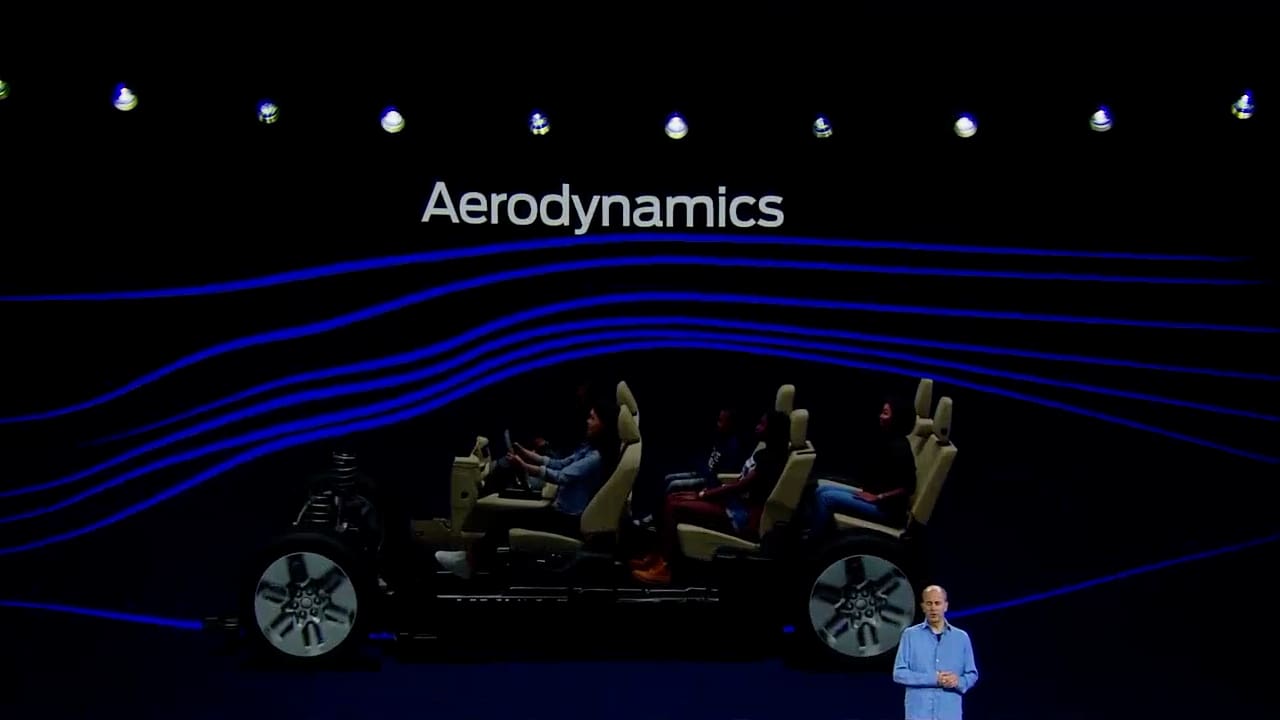
The Expedition Electric will be a model designed and engineered as an EV from the outset, not a conversion of the gas-powered Expedition. Otherwise, it would’ve needed a big battery pack with an energy capacity of around 150 kWh to deliver 300 miles of range, he added.
We could have converted an Expedition into an EV, but it wouldn’t have made for a very good EV and it wouldn’t have made for a very good Expedition. You’d have to put a really big battery in this vehicle in order to get just 300 miles of range on the highway, about 150 kilowatt hours of battery. That’s a big, expensive, and heavy battery.
Doug Field, Chief Advanced Product Development and Technology Officer, Ford Model e, Ford (Ford Capital Markets Day 2023 on May 22, 2023)
Size of the Explorer, space of the Expedition
Ford’s future three-row SUV will take up the footprint of a midsize SUV, but offer the space levels of a full-size SUV. During Ford’s Q3 2023 earnings call, Ford’s CFO John Lawler, offered a brief idea of the sizing of the SUV, while taking a question on pricing and cost structure of future EV launches.
If you look at our three-row SUV, the way we thought about that our Gen-2 product was it’s going to have the exterior size of an Explorer and the interior space of an Expedition.
John Lawler, Ford’s Chief Financial Officer, during Ford’s Q3 2023 earnings call, on October 26, 2023
24-inch wheels
The pure-electric Expedition will likely be available with wheels as big as 24 inches in diameter. According to a report Ford Authority released on May 25, 2023, Ford plans to offer the gas-powered Expedition with 24-inch wheels in the next (fifth) generation. It is common practice for automakers to ensure that their electric vehicles match or surpass the equipment level of their combustion-engined counterparts. Therefore, it is reasonable to expect the electric Expedition to feature wheels of the same size.
Models conceived as EVs typically have better component packaging, which frees more room for passengers (with longer wheelbase), for cargo (with a front trunk), and even wheels (with bigger wheel wells). EVs launched in the last couple of years are flaunting wheels an inch bigger than their ICE counterparts. General Motors, for example, offers 23- and 24-inch wheels on their latest full-size EVs like the Celestiq, Hummer EV twins, Silverado EV, and Sierra EV, also highlighting the growing preference for large wheels in the EV segment.
Specifications
Dedicated EV platform
The Ford Expedition Electric will be based on a dedicated EV platform. We’re possibly looking at the same truck platform as various large other models, including a Lincoln Navigator Electric/Lincoln Aviator Electric. That might be the next-gen skateboard that’s currently under development, which would mean that the Expedition Electric would be lighter and more space-efficient.
Range & Efficiency
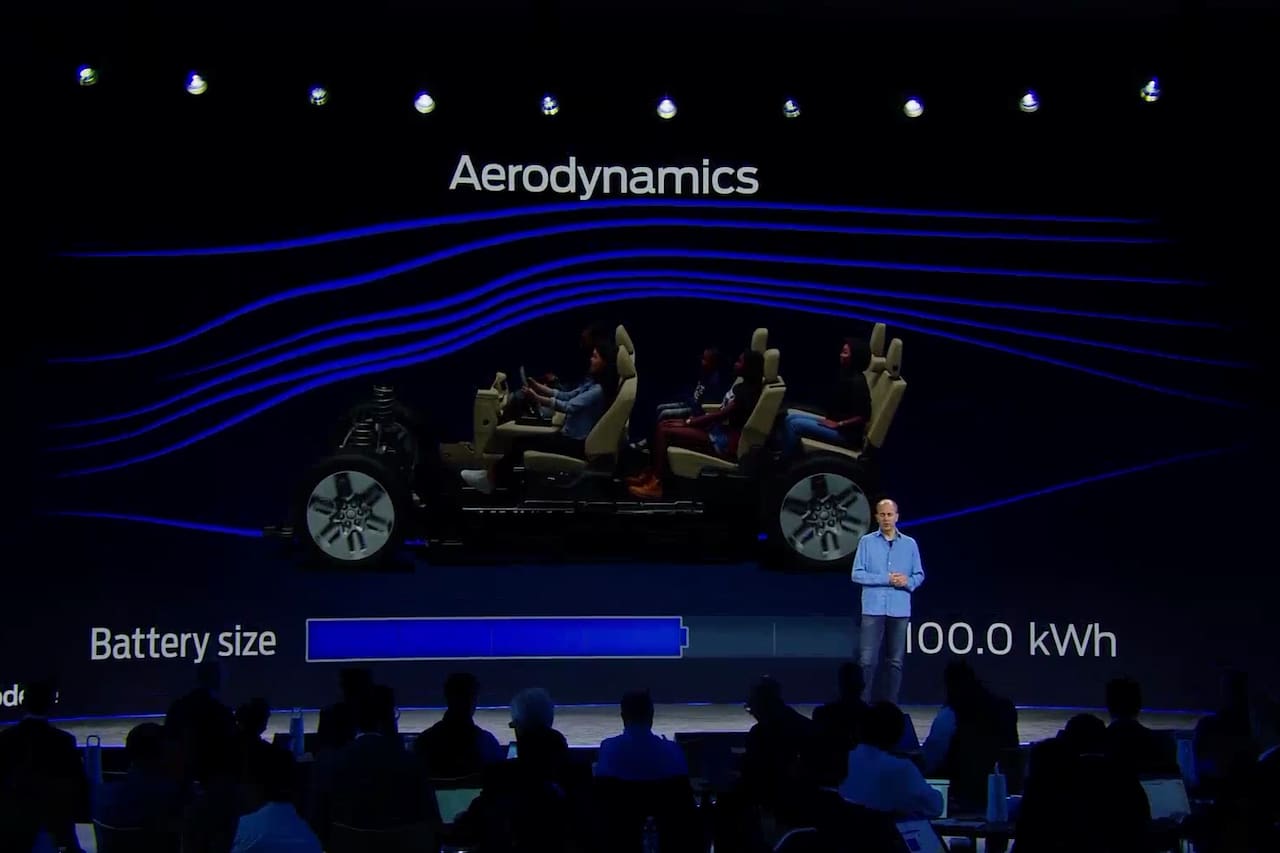
The Ford Expedition Electric will have a 100 kWh battery pack that delivers an impressive range of 350 miles! That targeted range translates to a targeted energy consumption rating of 29 kWh/100 mi, which means it’d be more efficient than even the Ford Mustang Mach-E, which consumes as low as 33 kWh/100 mi. Charging through a DC fast-charger for less than 10 minutes will add 150 miles of range.
Field said when Ford Model E began the development of its second-gen, three-row EV, it started by changing the way it thinks about the tires with lower rolling resistance, reducing the weight, lowering the ride height, changing the aerodynamics, and the result is a different product.
It’s a three-row family vehicle with 350 miles of range that can still cover 300 miles when you’re cruising at 70 miles per hour. It’s got a battery that’s one-third smaller and lighter, thousands of dollars less expensive.
Doug Field, Chief Advanced Product Development and Technology Officer, Ford Model e, Ford (Ford Capital Markets Day 2023 on May 22, 2023)
IonBoost battery
Ford’s future battery pack portfolio will include IonBoost lithium-ion, IonBoost Pro lithium iron phosphate, and solid-state units. IonBoost Pro battery packs will be for commercial models, while solid-state battery packs won’t be ready by the time Ford plans to begin production of the Expedition Electric. The company may use an IonBoost lithium-ion battery pack in the flagship electric SUV.
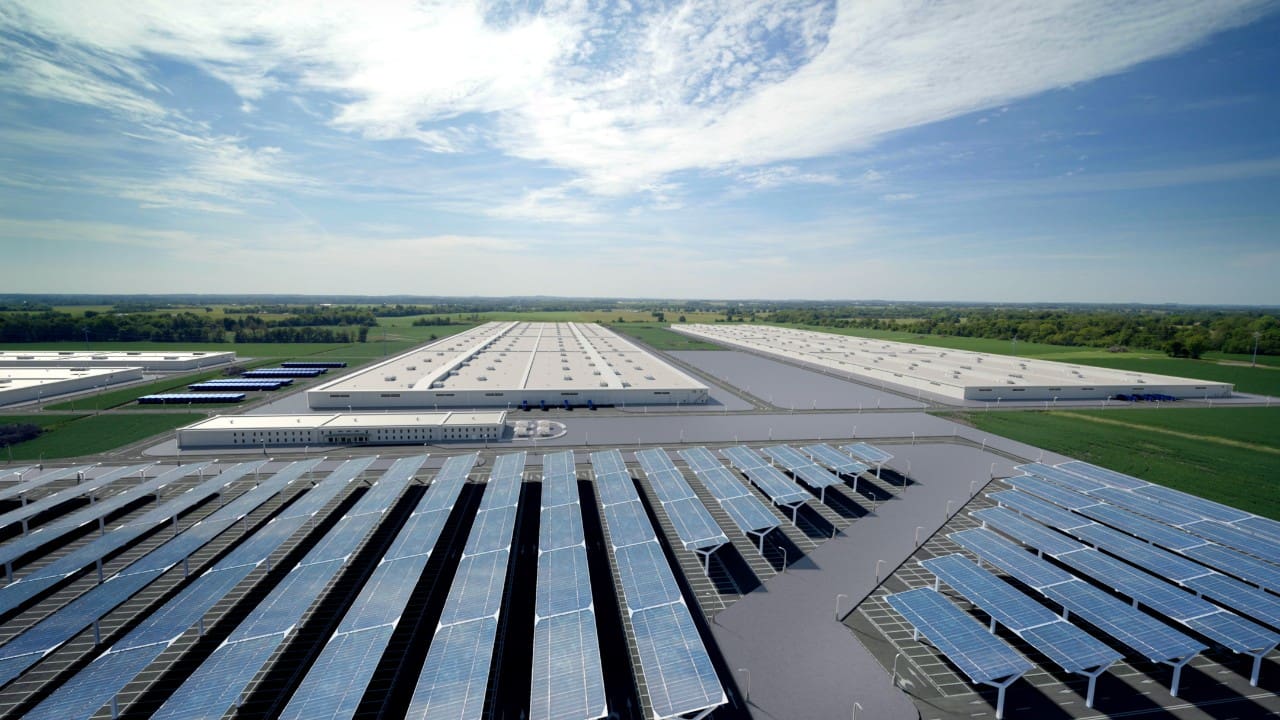
Development of the Ford Expedition Electric’s battery pack will likely take place at Ford Ion Park, a new facility dedicated to in-house research and development of battery and battery cell technology in Romulus (Michigan), USA. The Blue Oval will pump USD 100 million into this facility, which will help develop and produce Lithium ion and solid-state battery cells and arrays. Production at the USD 5.8 billion BlueOval SK Battery Park in Glendale (Kentucky) is expected to begin in 2025. BlueOval SK is a joint venture between Ford and SK On.
Features
Bidirectional charging
The Ford Expedition Electric would feature the Ford Intelligent Backup Power and Pro Power Onboard that allows using the traction battery pack as a power source for home, home appliances, power tools, security systems, and other rechargeable electrified vehicles. In the F-150 Lightning, customers can offload 9.6 kW with Ford Intelligent Backup Power. Plus, Pro Power Onboard lets them supply power externally to electronics, tools, and appliances directly through built-in electrical outlets, with up to 2.4 kW available through the frunk and up to 7.2 kW through the outlets in the cab and bed.
Frunk (‘Mega Power Frunk’)
The Expedition Electric may have a massive front trunk or a frunk under the hood. The lockable extra cargo space area may consist of multiple electrical outlets, USB chargers, and a drainable floor that can do the duty of a food and beverage container. It may have enough space to store at least two carry-on bags, and one checked bag or two golf club sets.
Autonomous driving
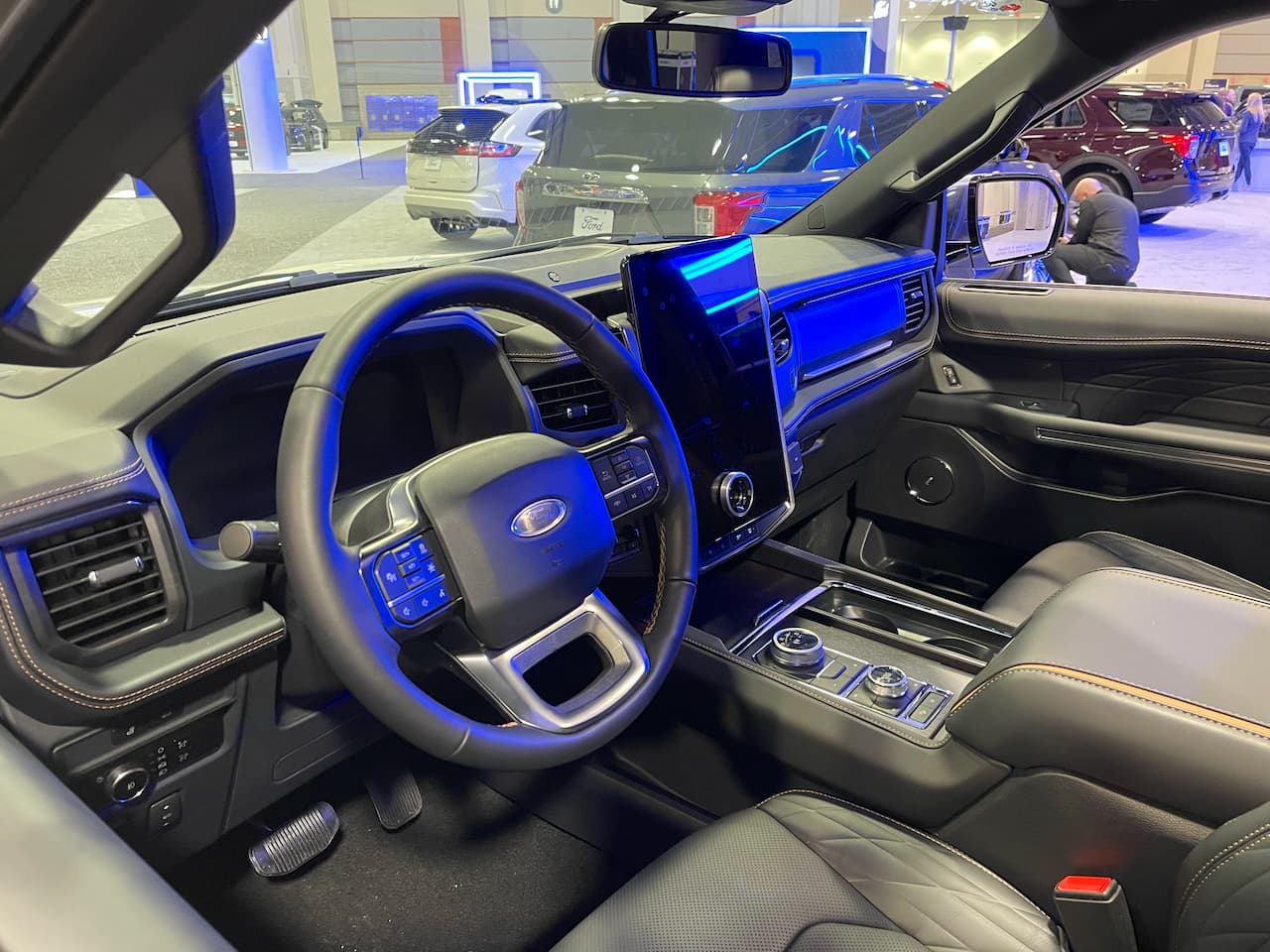
BlueCruise would enable Level 2 hands-free driving on ‘Hands-Free Blue Zones’ across the U.S. and Canada. Currently, this feature is usable on more than 130,000 miles of prequalified divided highways across the two countries, but by the time the Expedition Electric arrives, it should have grown considerably. Ford may have Level 3 autonomous driving capability ready by that time and offer the same in the full-size electric SUV.
Level 3 autonomous driving won’t be possible by the time of the Expedition Electric’s launch. “As much as I want it to, we’re not going to deliver L3 in 2025,” Field said at Ford’s 2023 Capital Markets Day event. “It’s just too ambitious an undertaking,” he added.
FordPass
FordPass is a smartphone app that lets customers monitor their vehicle and remotely control some of its functions. They can start/stop, lock/unlock, locate their vehicle, schedule a start, check its status, get roadside assistance and access to charging stations and use many more connected vehicle functions through the app.
Ford Power-Up
Software updates delivered over the air would fix many technical issues, bring technical improvements, and enable new features. With Ford Power-Up OTA updates, the vehicle keeps getting better throughout its life without needing a visit to the dealership.
Release date
Ford’s three-row electric SUV will arrive in 2025, Field revealed at Ford’s 2023 Capital Markets Day event. The market has started flooding with two-row electric SUVs, but the options for three-row electric SUVs are limited. Ford sees this as an opportunity, especially in the U.S., where automakers sell big family haulers that can comfortably accommodate up to eight adults in tens of thousands every year.
In 2023, Ford sold 73,396 units of the Expedition, while GM delivered 111,014 units of the Chevrolet Tahoe, 52,820 units of the Chevrolet Suburban, and 82,217 units of the GMC Yukon, and Stellantis shipped 29,149 units of the Jeep Wagoneer.
By 2025, we now expect there to be 45 EV models to be offered in the US in the small and medium utility segment. It will be a very saturated two-row EV market.
Jim Farley, President and CEO, Ford (Q1 2023 earnings conference call on May 2, 2023)
During Ford’s Q1 2023 earnings conference call on May 2, 2023, Farley said the two-row EV category will get saturated in a few years. Three-row seating will allow the company to distinguish its EVs and make them more appealing to customers.
In contrast to two-row crossovers that we believe will be a very saturated market, we believe Model e can be highly differentiated in markets where we know the customer well, like the three-row utility space.
Jim Farley, President and CEO, Ford (Q1 2023 earnings conference call on May 2, 2023)
TopElectricSUV says
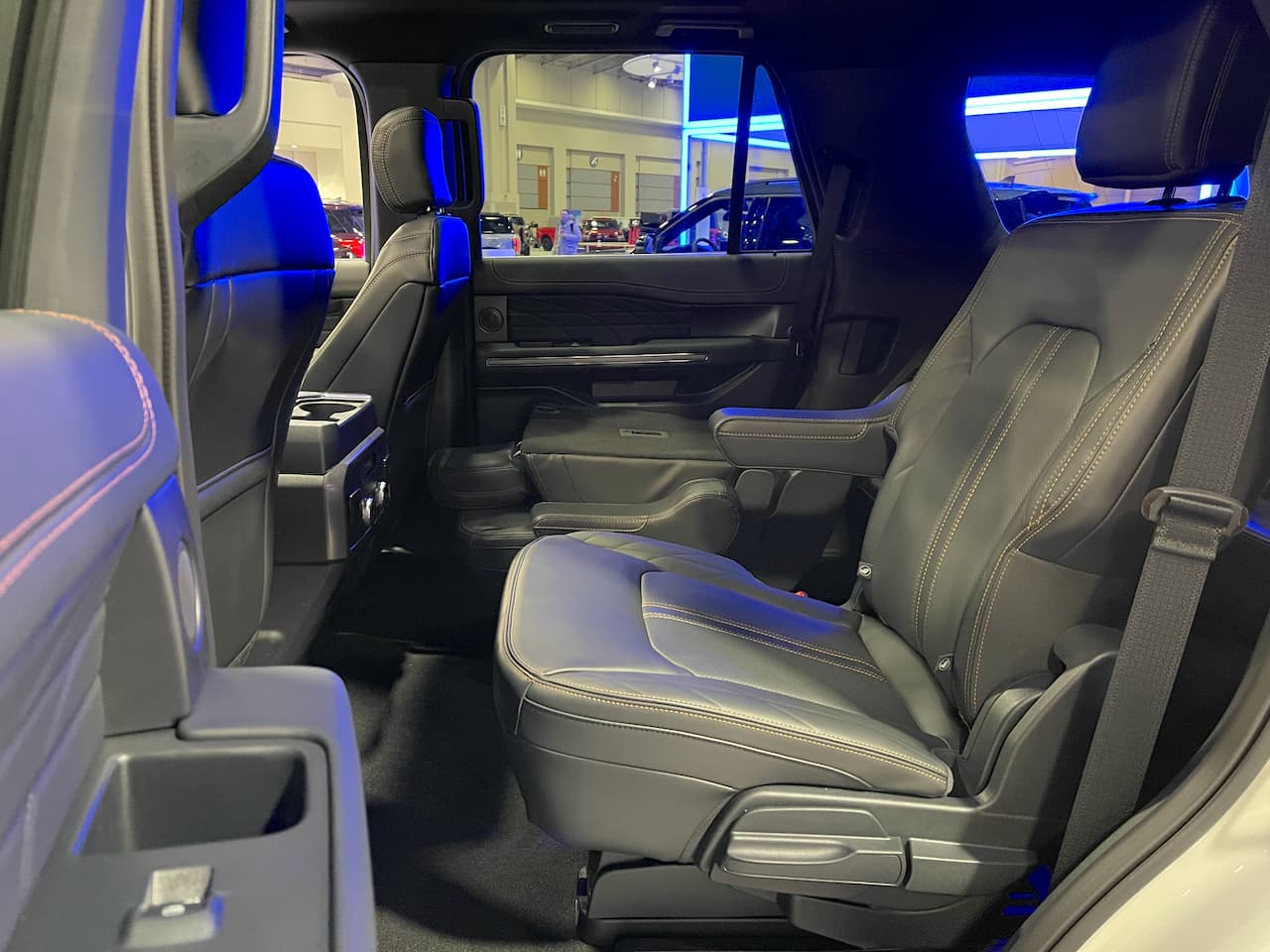
The Ford Expedition Electric is poised to be a full-size three-row SUV offering a more spacious and comfortable interior for up to eight adults and featuring a highly digital cockpit and semi-autonomous driving functions that make those weekend adventures and other road trips effortless – all with zero tailpipe emissions. Plus, it should prove more useful than the gas model with several innovative features, like vehicle-to-home (V2H), for instance, which will make it an emergency power backup.
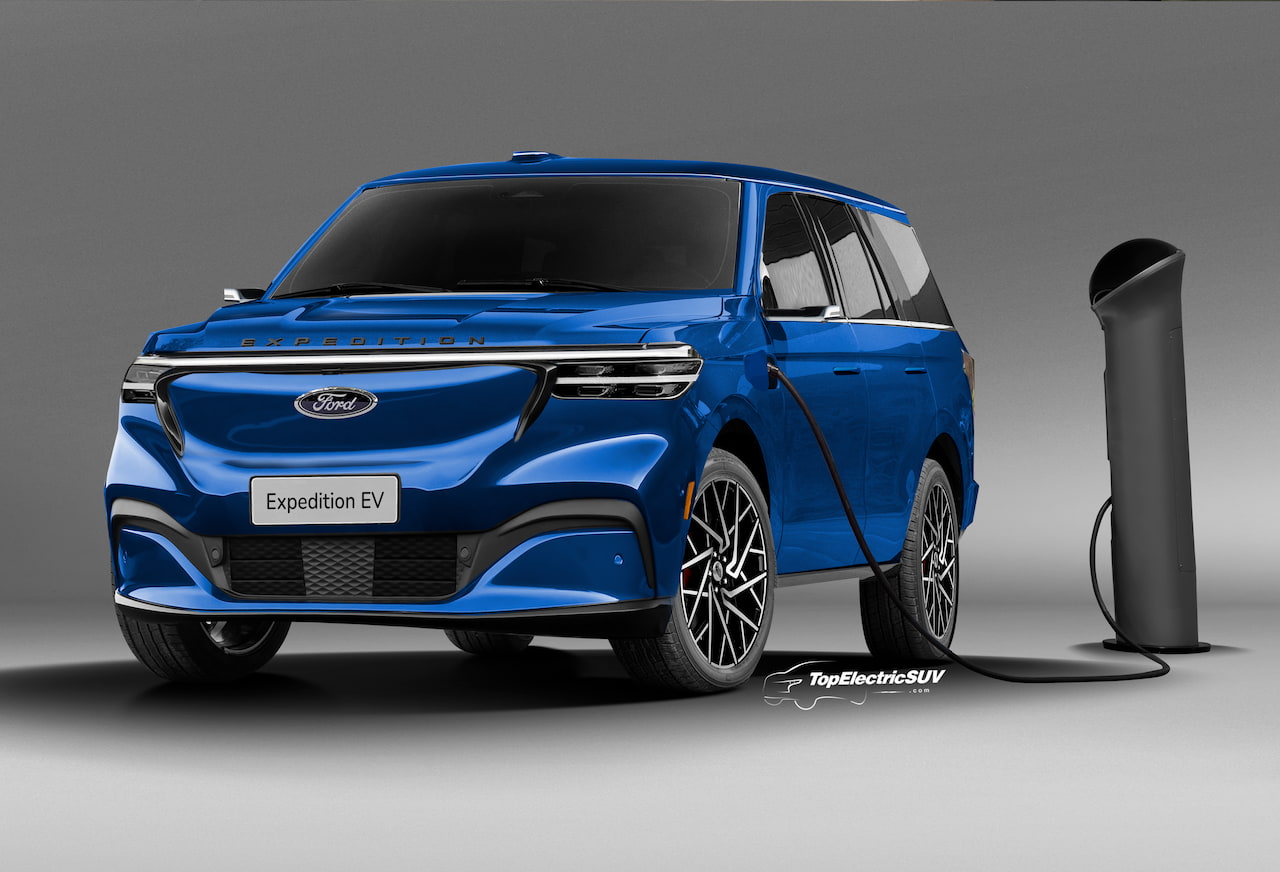
The featured image is a rendering of the Ford Expedition Electric that introduces Ford’s EV styling to the current SUV’s design. It is made for illustrative purpose, and does not preview the actual vehicle.

I got my Master’s in Business Management & Administration and have been an International Automotive News Editor since 2014. I’ve traveled to global motor shows and automotive events, driven various types of vehicles, and focused on hybrid and electric cars in the last 4 years.