Update: ‘Performance’ and ‘Battery & Range’ sub-sections of ‘Specifications’ and ‘Release Date’ and ‘Price’ sections updated.
A post from BimmerPost forum member ynguldyn, a credible source for BMW scoops, suggests that the next-gen BMW iX3 (codename: BMW NA5) will be among the first Neue Klasse electric models. Unlike the current electric SUV that is sold in Asia and Europe, the next-gen iX3 should be available in the U.S., boasting of faster charging, longer range, better space, and improvements in all other aspects over today’s model.
New nomenclature
British auto magazine CAR, has learned that BMW will adopt a new nomenclature for EVs beginning with the forthcoming X3 and 3 Series. Its sources have revealed that the combustion variants would be badged X320 and X330, whereas the electric versions would retail as the BMW iX330, BMW iX340 and the BMW iX350. Presumably, the iX350 would be the top-spec configuration with a dual-motor AWD system in the regular line-up.
Neue Klasse platform
Neue Klasse will be the family of third-gen BMW EVs. Redefined IT and software architecture, a new generation of electric drivetrains and batteries, and a new approach to sustainability throughout the lifecycle will be the main pillars of BMW Neue Klasse electric models.
The next-gen BMW iX3 will sit on this platform, which has been developed exclusively for zero-emission models. “The Neue Klasse is electric-only,” Dr. Nicolas Peter, former CFO, BMW Group, said during the company’s Q2 2022 earnings conference call on August 3, 2022. We expect the BMW 3 Series electric and the BMW X4 Electric (BMW iX4), alongside the new iX3, to be the first fruits of the Neue Klasse project mid-decade.
Design that’s a bit low slung
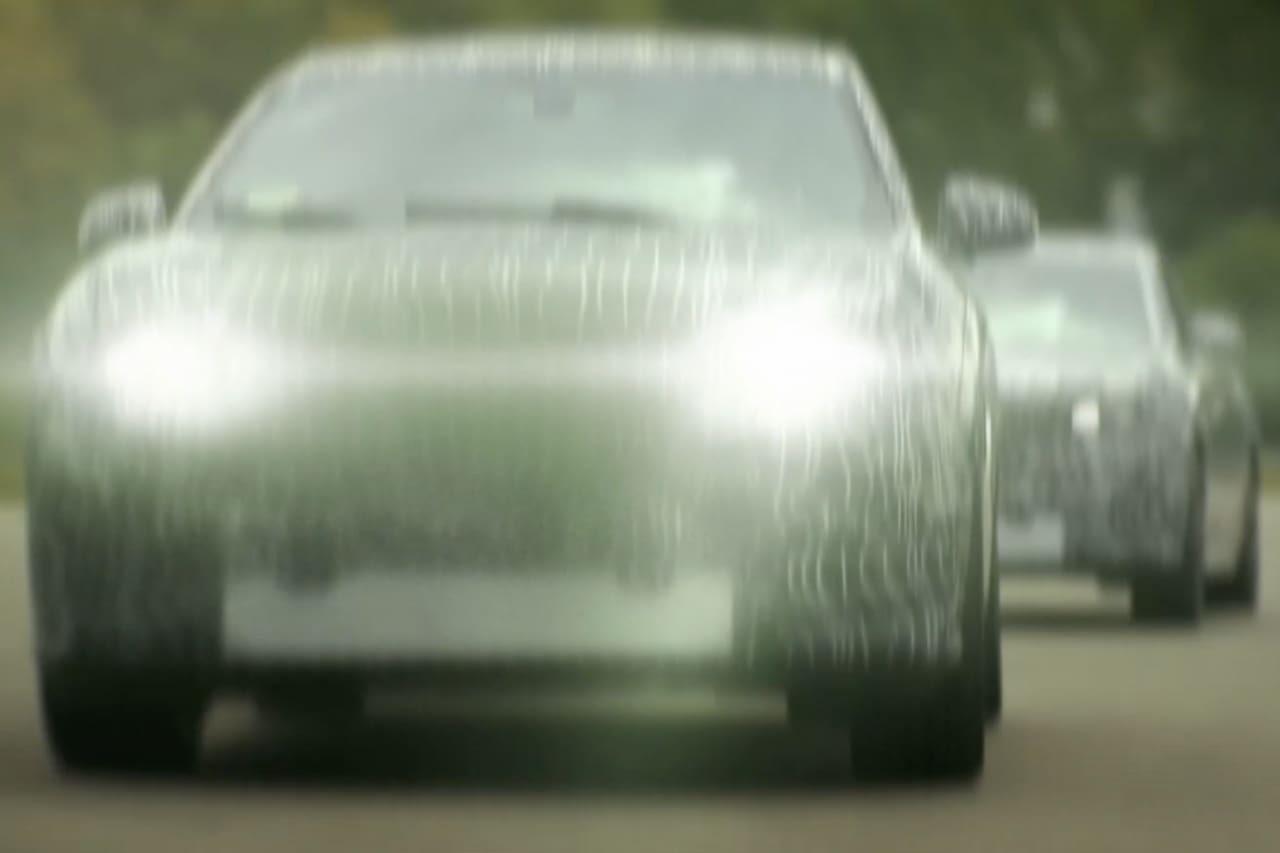
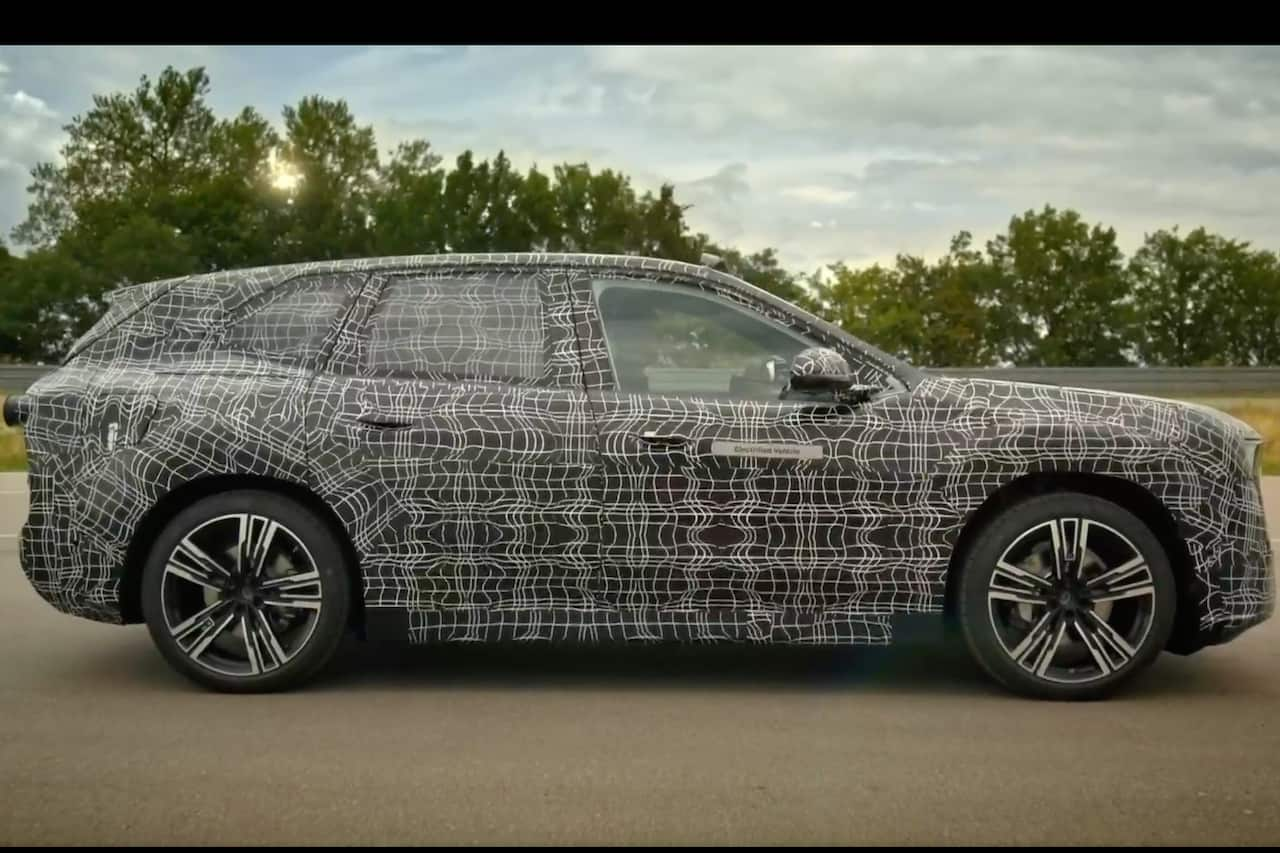
The next-gen BMW iX3 takes on a sportier and more aerodynamic form, as seen in the first official teasers. The redesigned electric SUV is lower and has a more hunched rear section, which gives it a powerful stance. The front appears to be concave, and its design stands out as distinct from every other BMW X models currently available, including the iX.
The A- and D-pillars are more raked that would contribute to improving the car’s aero efficiency, while the overhang are shorter, implying that designers have maximized space efficiency.
All-new interior
The next-gen BMW iX3 will embody a new design for the interior, introducing new levels of minimalism, space, and convenience in the cabin. The U.S.-bound BMW X3 Electric will feature a new dashboard display called BMW Panoramic Vision, which will project information in color onto a dark-coated area at the lower edge of the windshield and cover its entire width. Not just the driver, but the front passenger would be able to interact with BMW Panoramic Vision.
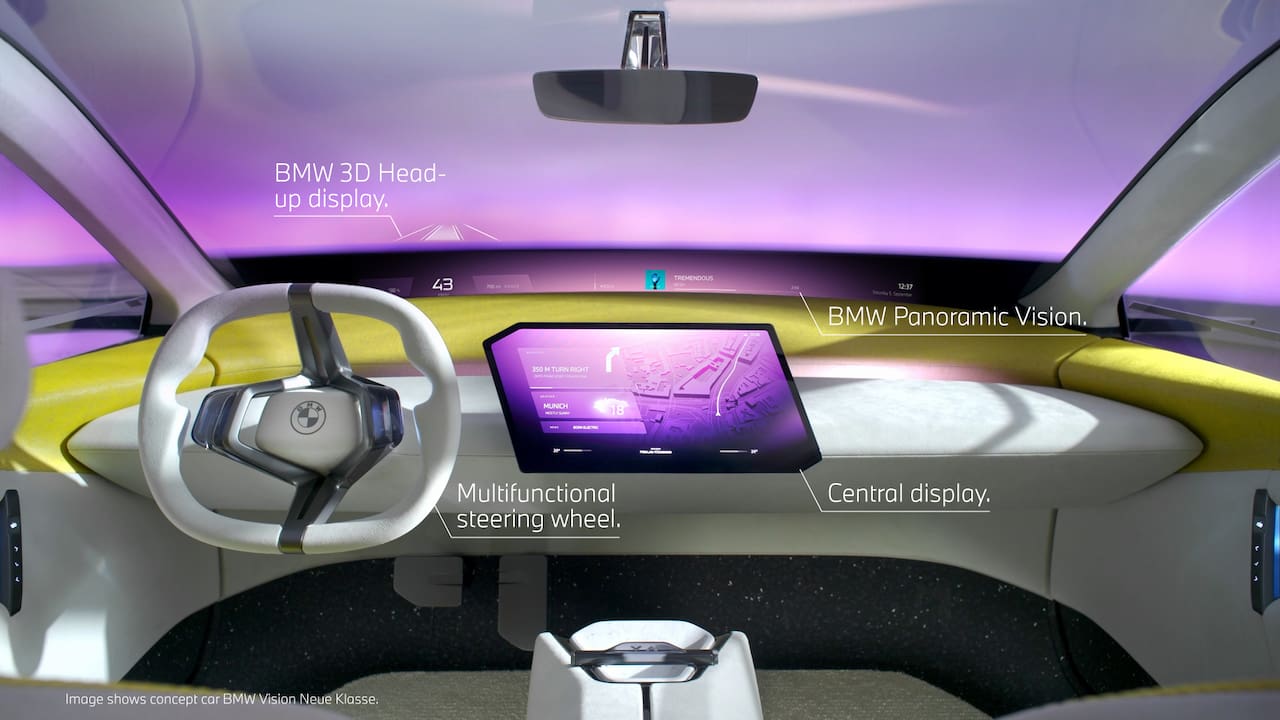
The BMW Panoramic Vision system would eliminate the need for the instrument cluster, helping clean up the dashboard and making things look more symmetric. Moreover, “you get rid of the instrument cluster, you do your steering wheels in a different way,” Stephan Durach, Senior Vice President for Connected Company Development, BMW Group, said in an interview, Reuters reported on September 2, 2023.
We’re expecting the next-gen iX3 to feature a squircle multifunction steering that allows the driver to control the display contents of the BMW Panoramic Vision and a new BMW 3D head-up display complementing that ultra-wide screen. The central display could have matrix backlight technology that gives it a high resolution, vibrant colors, and strong contrast, no matter what the light conditions are.
The in-cabin electronics of the next-gen iX3 will run on the next-gen BMW Operating System. In addition to new electronics and software, the all-new electric mid-size SUV will see extensive usage of various new eco-friendly materials, including upcycled, recycled, and sustainably produced ones.
Multi-function seats with massage feature, and M goodies (such as M interior trims, M seats, and M steering) are expected to be offered.
Specifications
BMW Group has provided indications about what to expect from the Neue Klasse, and how it will improve upon the current model. The next-gen BMW iX3 will debut the sixth generation of BMW eDrive technology. The proprietary term ‘BMW eDrive’ refers to a combination of the core components of an EV, which are power electronics, electric motor(s), and a high-voltage battery pack.
Performance
A report BMWBlog released on January 29, 2024, suggests that the iX3 is likely to be available with standard range RWD, standard range AWD, extended range AWD, and ‘M Performance’ AWD variants. The standard range RWD and standard range AWD variants should have a smaller battery pack and only one motor for more affordability. According to the report, the power outputs of all the variants should start at ~340 hp and go up to 550+ hp.
In a previous report dated December 22, 2023, BMWBlog had indicated that the iX3’s highest power output could be closer to 600 hp than 550 hp and also that an iX3 M with even higher power output should follow by 2028.
Cells
In an announcement on September 9, 2022, Joachim Post, BoM Member responsible for Purchasing and Supplier Network, BMW Group, revealed that the company plans to use newly-developed round battery cells in the sixth-gen eDrive. Manufacturing of the new cells will take place at two factories in China, two in Europe, and two in the North American free trade zone.
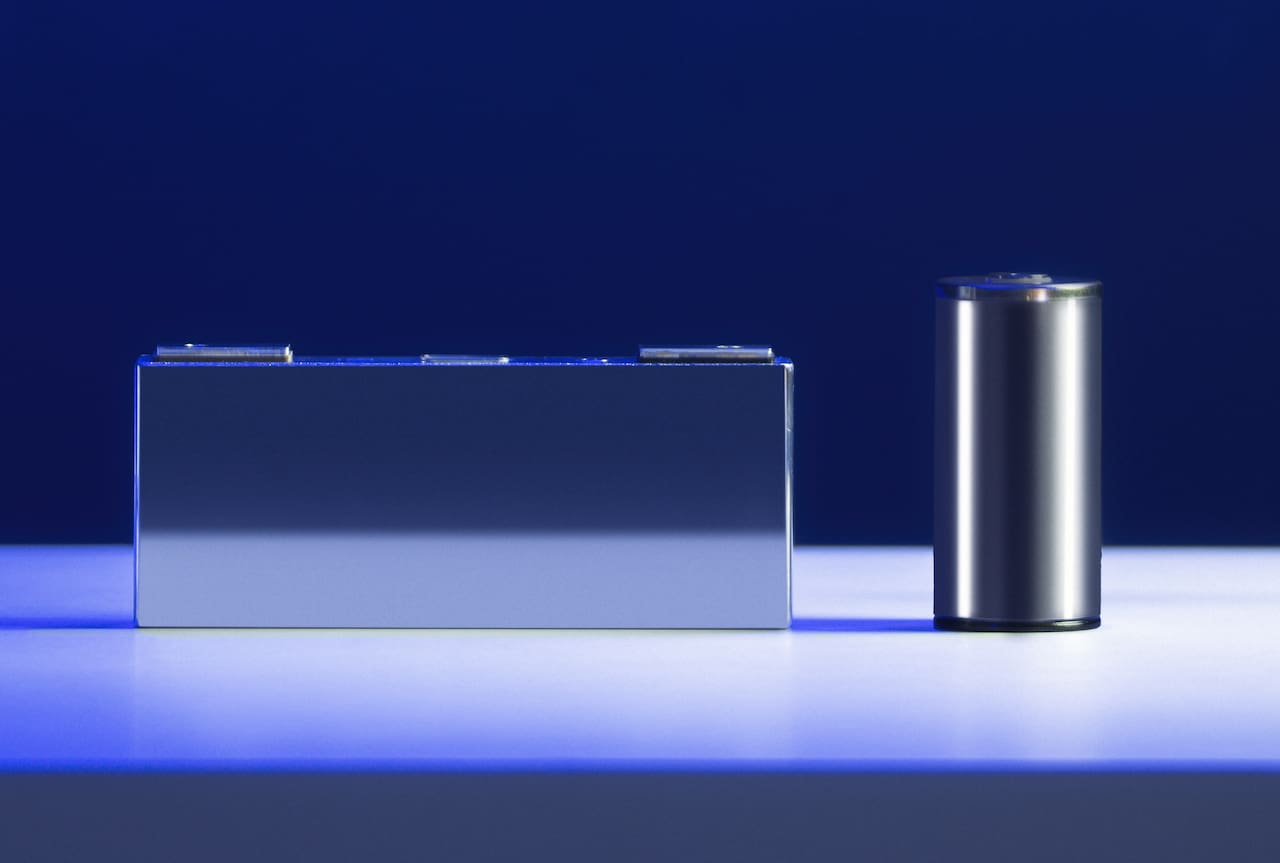
The new cylindrical cells will be the sixth generation of BMW’s lithium-ion battery cells and could be comparable to Tesla’s 4680 cells. They will have the same diameter (46 mm) and two different heights (95 mm and 120 mm). According to the CAR report, the short cells will go into low-riding EVs (like the global i3 sedan) and the bigger tall cells will go into the high-riding EVs (like the next-gen iX3).
Compared to the fifth-gen cells, which are prismatic cells, the nickel content will be higher on the cathode side, while the cobalt content will be lower. On the anode side, the silicon content will be higher.
Battery & Range
BMW Group CEO Oliver Zipse has indicated that the Neue Klasse EVs in the mid-size segment will have the best-in-class range. Talking about the first model at CES 2023, he said that it “will be the benchmark in terms of range, charging speed, and pricing,” Automotive News Europe reported on January 12, 2023. As for the next-gen iX3, it would need to beat the Tesla Model Y that delivers an EPA-est. range of up to 310 miles.
Frank Weber, BoM member responsible for Development, BMW Group, said that the sixth-gen lithium-ion cells will offer more than 20% improvement in energy density, up to 30% faster charging, and up to 30% longer range. For reference, the current BMW iX3 with the fifth-gen (prismatic lithium-ion) cells can travel up to 461 km or 286 miles on a full charge as per WLTP.
According to the aforementioned BMWBlog report dated January 29, 2024, the Neue Klasse iX3 should deliver a WLTP range of 700-800 km. In that case, we expect the EPA-estimated range to be 350-400 miles.
Module-less design
The next-gen BMW iX3 is likely to feature a module-less battery pack technology. In a typical EV, the battery pack consists of modules, and these modules contain the cells. The upcoming module-less battery pack should have better volume utilization efficiency. BMW Group has confirmed it will directly integrate the battery into the structure of its Neue Klasse EVs, a method Tesla has already implemented for the Model Y.
Capacity
Weber shared new details about the battery packs at the Nachhaltigkeit durch Innovation (Sustainability through Innovation) event held in Munich on September 5, 2022. The energy storage capacity of the battery packs used in the Neue Klasse EVs will range from 75 kWh to 150 kWh, BMW’s development boss revealed at the Munich event.
Don’t expect the iX3 to get the biggest units, as Weber said that making the EVs heavier by installing higher-capacity battery packs to achieve extremely long ranges would be counter-productive. Instead, the aim is to achieve the lowest energy consumption by working on the EVs’ rolling resistance, aerodynamics, and energy efficiency.
Variants
According to a posting by ynguldyn of Bimmerpost, all upcoming BMW models based on the Neue Klasse architecture could be offered with different battery & motor combinations. It’s being suggested that the next-gen iX3 SUV will be available in rear-wheel drive (RWD) and all-wheel drive (AWD) configurations spread across multiple variants – namely Standard Range RWD, Standard Range AWD, Long Range AWD, and even an M Performance AWD. If this sounds familiar, remember Tesla uses a similar naming strategy in its model line-up.
Thomas Albrecht, head of Efficient Dynamics, BMW, has said that, though technically possible, the company won’t use the next-gen cells to offer a range (WLTP) of over 1,000 km or 621 miles, as per an Autocar article dated September 15, 2022. Adding batteries to reach a four-digit range in the iX3 would be wasteful and make the SUV heavy and expensive.
Charging
With double the regular charging voltage – 800 volts, the Neue Klasse EVs should take the maximum benefit of Electrify America’s 350 kW rapid chargers in the United States. Weber said that every minute of fast charging would increase the range by 30 miles to a maximum of 375 miles.
Iron-based cells
BMW Group plans to use cheaper, lithium iron phosphate cells also in select future BMW EVs, and the next-gen BMW iX3 could be one of them. The company could install lithium iron phosphate (LFP) cells in the low-end configurations of the next-gen BMW iX3 to price it competitively in select markets, one of which could be China. Dr. Ing. Marie-Therese von Srbik, Head of Battery Cell Development, BMW Group, has said that LFP cells make more sense for lower-range EVs. The rumored BMW i1 and BMW i2 models in the second half of the decade would benefit from this chemistry.
Production
Europe
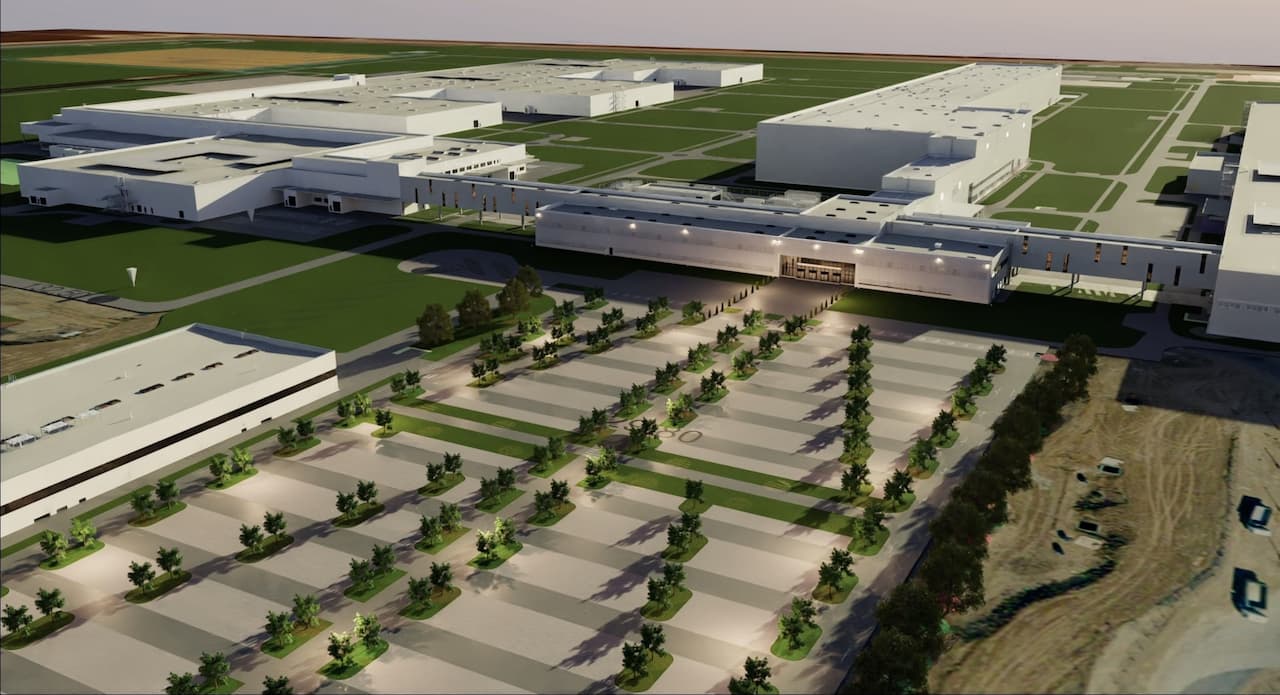
BMW Group has confirmed that production of the first Neue Klasse electric model will take place at a new plant in Debrecen, Hungary, from 2025. According to BimmerPost forum member ynguldyn, the next-gen BMW iX3 will enter production at the company’s new Hungarian factory as its first Neue Klasse electric model in July 2025 and remain in production until October 2033.
Spread over more than 400 hectares to the northwest of Debrecen, the new plant will have an annual production capacity of approximately 150,000 vehicles. It comes after an investment of more than EUR 1 billion (USD 1.1 billion), and the factory already employs over 1,000 people. This production facility, which comes online in 2025, will not use fossil fuels, depending exclusively on renewables for all its energy needs.
North America
The aforementioned BimmerPost forum member claims that BMW Group plans to make the next-gen BMW iX3 in North America as well, at the company’s existing facility in San Luis Potosí, Mexico. He claims that production will begin here during the second half of 2026. The Mexican factory currently builds the seventh-gen 3 Series Sedan and the second-gen 2 Series Coupe.
BMW Group has confirmed it will manufacture Neue Klasse electric cars in San Luis Potosí, Mexico, and also assemble high-voltage batteries (batteries for the EDU, not ancillary components) there. Vehicle production will begin in 2027, and we think the first model could be the next-gen iX3. The company will invest EUR 800 million (USD 867 million) in Mexico, of which EUR 500 million (USD 542 million) will go into the construction of an 85,000 m2 facility to assemble high-voltage batteries.
Asia
The BMW Brilliance Automotive joint venture plant in Shenyang, China, which is the exclusive producer of the first-gen iX3, may also build the next-gen iX3. This way, like Tesla, BMW Group would have its mid-size electric SUV strategically produced on three different continents with local adaptations.
Electric drive units
In the all-new iX3, the BMW Group will likely use e-drive units manufactured by Steyr, Austria. It has been confirmed that the company will use sixth-generation e-drives in its Neue Klasse models and manufacture them at its Steyr Plant. On June 20, 2022, the company announced that the Austrian factory would build the next-generation e-drives starting in 2025. Every year, Steyr will produce more than 600,000 e-drives. Rotor, stator, transmission, inverter, and housing will all be made at the Austrian engine plant in the future.
Release Date
The next-gen BMW iX3 could debut in Summer 2025, with customer deliveries commencing in Europe in Q3 2025. In the U.S., customer deliveries of the Mexican-made next-gen iX3 could begin in 2026. Road-testing of the upcoming electric mid-size SUV is in full swing. The next-gen 2025 BMW X3, expected to come in standard, hybrid, and plug-in hybrid variants, is also under development and may precede the EV.
Price
“Don’t forget pricing,” Zipse said after telling reporters at CES 2023 that the first Neue Klasse EV will be a benchmark in terms of pricing among other aspects. Considering the BMW Group boss emphasizes best-in-class pricing, we think the next-gen iX3 will start at around USD 55,000-60,000. The German luxury SUV is likely to be more expensive than the Tesla Model Y, the prices of which start at USD 44,990.
TopElectricSUV says
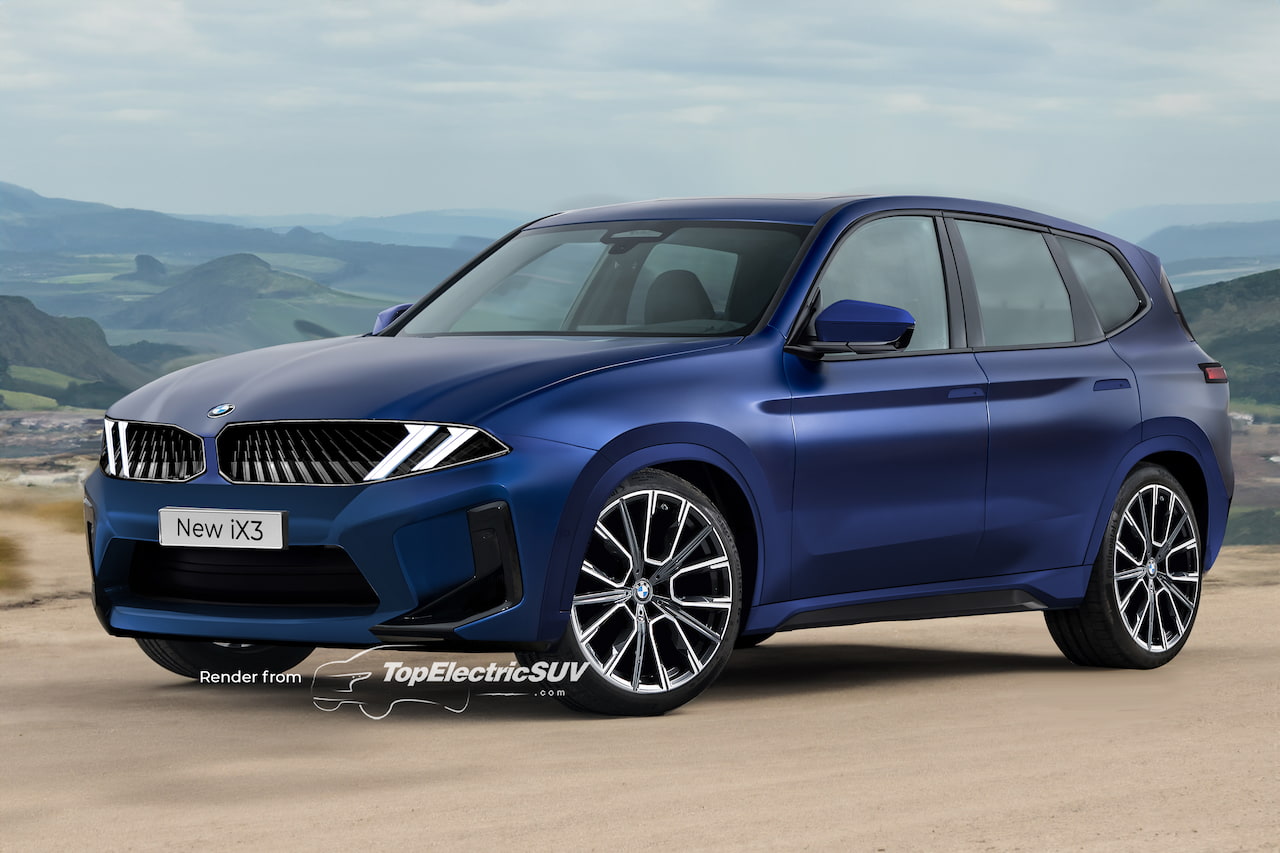
BMW Group can’t afford to ignore America’s most popular luxury EV segment for long. Though it may not be bringing down the current iX3 due to its limited range, performance, and lack of an AWD, the next-generation iX3 is a certainty. Besides its generational improvement in user experience, the redesigned electric mid-size SUV should be significantly more efficient and offer a longer range than the current model. Add North American production to the mix for a lower price, and Munich may have a potential top-seller in the U.S.
Next-gen BMW iX3 FAQs
What is the next-gen BMW iX3 release date?
The next-gen BMW iX3 is expected to arrive in the U.S. in 2026. Europe should receive it in H2 2025.
What will be the next-gen BMW iX3 price?
Expect the new BMW iX3 range to be priced between USD 55,000 and 70,000.
Which models will be the next-gen BMW iX3 rivals?
The next-gen BMW iX3 will rival the Audi Q6 e-tron, Tesla Model Y, and the new Mercedes GLC Electric.
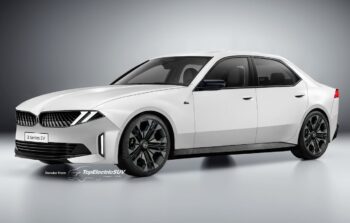
Featured Image: TopElectricSUV’s illustration of the next-gen BMW iX3.

I got my Master’s in Business Management & Administration and have been an International Automotive News Editor since 2014. I’ve traveled to global motor shows and automotive events, driven various types of vehicles, and focused on hybrid and electric cars in the last 4 years.